We acknowledge the First Nations Peoples of Wisconsin.
We at the NEW Zoo & Adventure Park in Green Bay, Wisconsin, acknowledge the First Nations people who are the original inhabitants of the region. The First Nations have strong historical and spiritual connections to the land that we now call Brown County. Prior to the 1600s, the area of Brown County was home to the Ho-Chunk (Hoocąk) Nation and the Menominee (Kāēyās maceqtawak) Nation tribes who still reside and thrive in Wisconsin. By the mid-1600s, other tribes moved into the area as they were displaced from their ancestral lands further east, and they, in turn, displaced the Ho-Chunk and Menomonee tribes.
The Menominee and Oneida Nation Reservations are currently the closest tribal lands to where we are located. The Oneida Nation of Wisconsin (Onʌyoteˀa·ká) did not originally inhabit the area, but rather the people were forced to relocate to this region from the New York state area.
The Beginnings of the Zoo…
The area where the NEW Zoo & Adventure Park currently exists was settled by Europeans in the 1800’s. The land was heavily forested, and a robust lumbering industry quickly grew and thrived. Once most of the trees were cut down, farmers took over and tried to raise crops on the land, but the sandy soils made it difficult for crops to grow. One by one, the farms failed and the land defaulted back to the county when owners could not pay their taxes.
In 1948, sparks from a passing train ignited a forest fire that destroyed most of the remaining trees, and the county was left with a large tract of public land that was now barren and unusable. Members of Brown County’s Agriculture Conservation Commission came up with the idea to reforest the land using county inmates to plant the trees. This would turn the area back into a useful green space the public could enjoy.
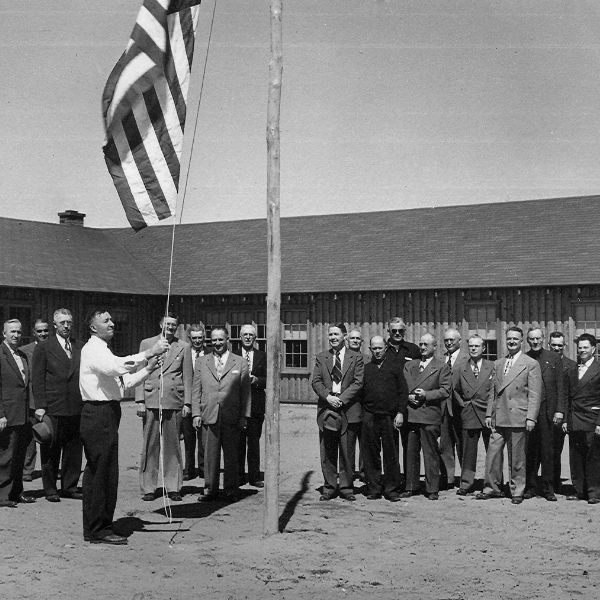
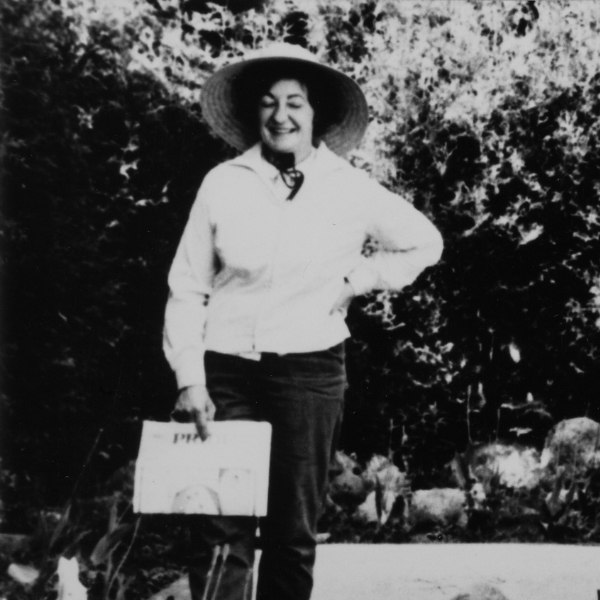
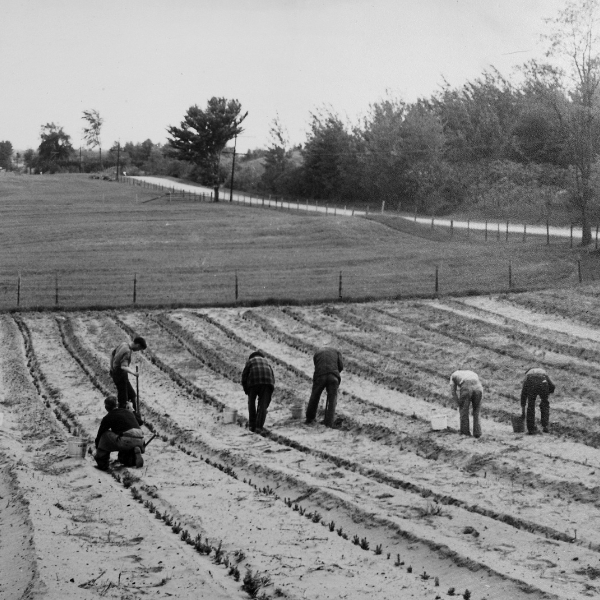
The first man put in charge of the new Reforestation Camp was Harry Barth. Harry, his wife Aurelia (pictured above, center), and their family moved into a house on a hill that overlooked the camp in 1949. For the first year, Harry drove to and from the county jail each day, transporting the men assigned to work on the camp construction while Aurelia took care of preparing meals for everyone.
By spring of 1950, two dozen inmates at a time were able to live at the camp’s completed living facilities, and the work of planting to reforest the land could begin. Over 250,000 native pine, spruce, and cedar seedlings were planted that year, with more planting to follow.
In December of 1951, Harry passed away from a heart attack and the Brown County Board met quickly to fill his position. Aurelia applied, and although the Board had reservations about a woman’s ability to do the work, they recognized her dedication and understanding of the Reforestation Camp’s operation. She was hired and became the first woman in the history of the United States to supervise male inmates. She quickly earned their respect, along with the respect of the community, and the Reforestation Camp continued to grow and succeed.
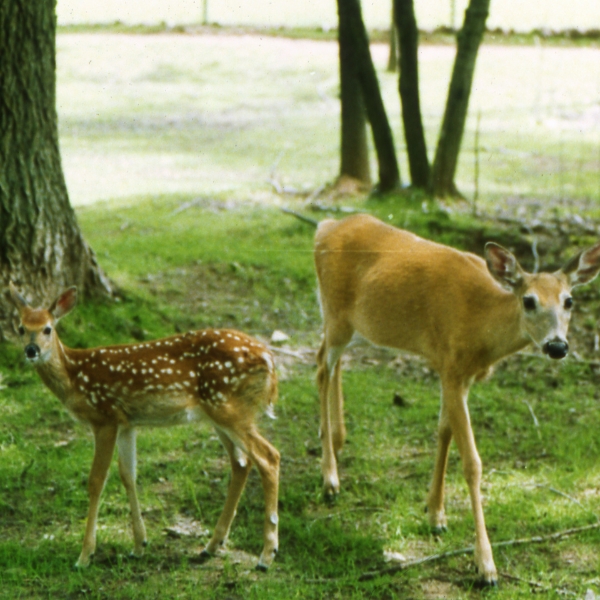
By 1952, the Reforestation Camp was starting to be seen by the community as a treasured green space, and some orphaned animals, such as white-tailed deer fawns, were dropped off to be cared for by the inmates. The first animal pen was built in 1952, and things took off from there.
And that’s how the Northeastern Wisconsin (NEW) Zoo was born, with just a few white-tailed deer, a porcupine, an orphaned black bear cub, and some timber wolf pups.
Growth & Modernization
Through Aurelia’s hard work and leadership, with the help of many other dedicated community members, the Zoo continued to grow and thrive. In 1985, Brown County was facing budget shortfalls, and the Zoo had grown so large that board members felt the County could no longer support zoo operations. The Zoo was removed from the tax levy – meaning funding was cut.
Luckily, a group of concerned citizens that did not want to see the Zoo close got together and formed a fundraising organization known as the N.E.W. Zoo Boosters. The Boosters raised money to cover costs, fund operations, and keep the Zoo open. The Zoo became an “enterprise fund” of Brown County, meaning that although the Zoo is considered owned and operated by Brown County, it must be self-funded.
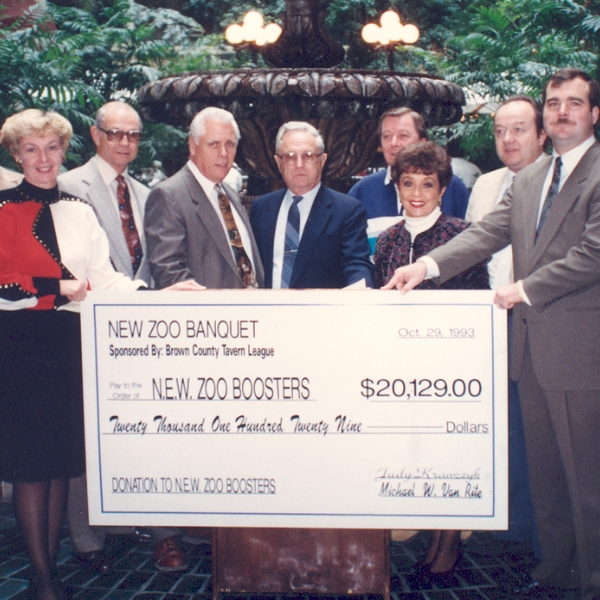
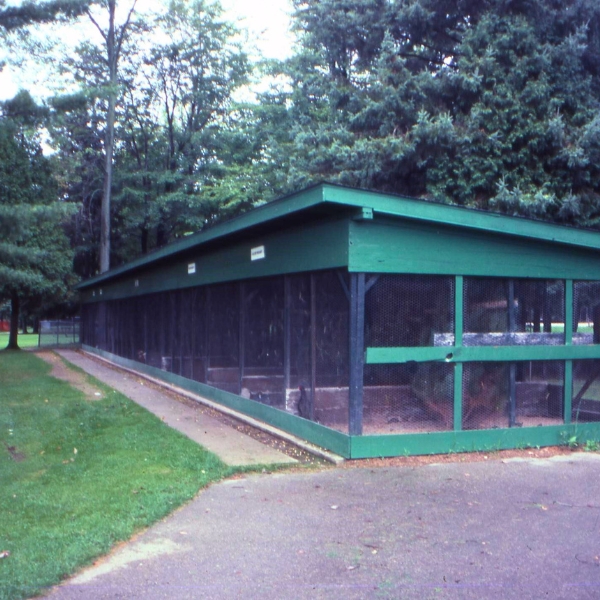
Over the years, the Boosters raised funds not just for operations but for the growth and modernization of the NEW Zoo. Buildings were constructed, exhibits and habitats were upgraded, and additional staff were brought on to provide guest services, educational programs, and more. In 1996, the Zoo became accredited by the Assocation of Zoos & Aquariums (AZA), signifying our commitment and dedication to maintaining the highest standards of animal care while contributing to conservation and education.
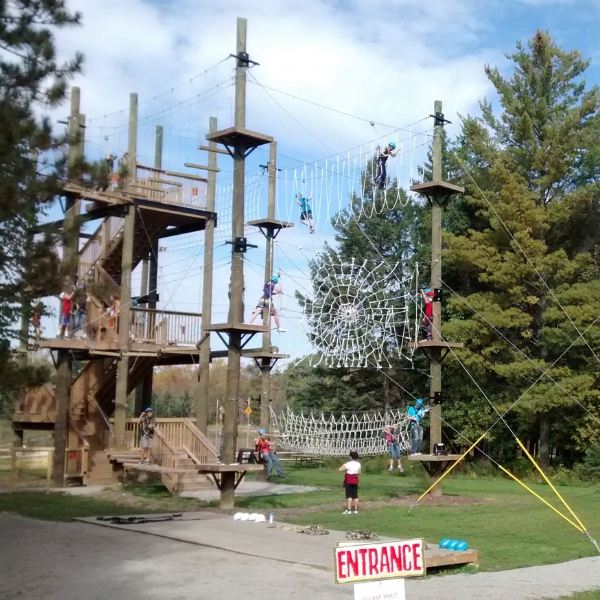
In 2014, with the completed construction of a ropes challenge course, climbing wall, ziplines, and base camp building, the NEW Zoo officially became the “NEW Zoo & Adventure Park.” In 2022, the Neil Anderson Canopy Tour was opened, providing a new way to “experience the Zoo from a whole new view.”
The N.E.W. Zoo Boosters eventually evolved into what is today known as the NEW Zoological Society, our 501(c)(3) partner organization that continues to fundraise for capital improvements such as new buildings and animal habitats. The NEW Zoo & Adventure Park’s daily operations are fully self-funded.
Very few zoos and aquariums across the country that are AZA accredited are also self-funded. That means we are in a very unique position! Every dollar raised here goes directly back into supporting our operations: keeping the Zoo open, providing the absolute best for the animals and our staff, and striving to create the best guest experiences that we can. Your visit makes a difference, and we thank you for your support!
Special Thanks
Thank you to the Howard-Suamico Historical Society for photos and historical facts.